Garry Kapoor
Senior UX Leader, Connected Buildings
The Sentient Building reverses that. It notices its own faults, decides which ones it can fix, and surfaces the rest to the right person before anyone else sees them — owner, operator, technician — each receiving only what they can act on.
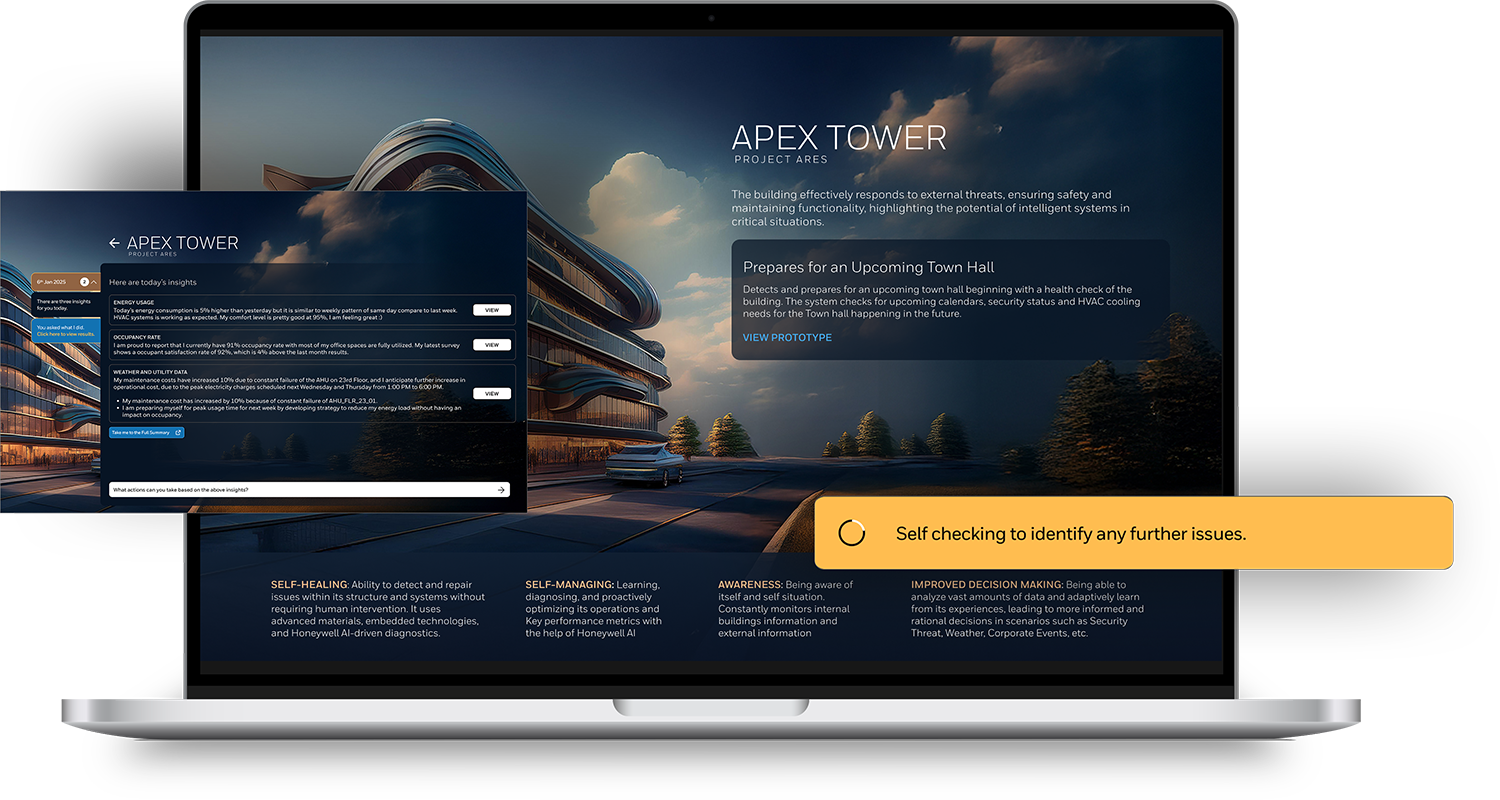
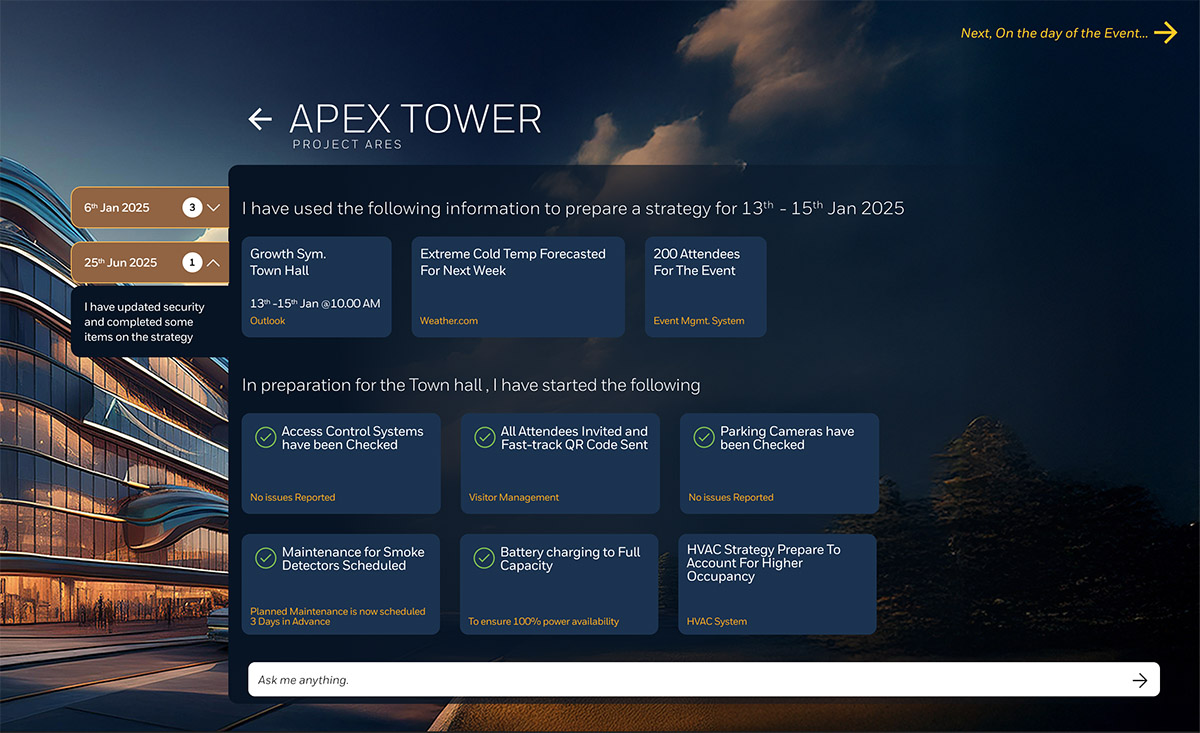
"I want to ensure that the buildings, infrastructure, and services operate efficiently, safely, and sustainably to support the needs of the organization and its occupants." The scenario: the operator prepares for an upcoming town hall, beginning with a health check of the building — the system checks upcoming calendars, security status, and HVAC cooling needs for the event happening in the future.
Facility managers often operate reactively — equipment failures, space inefficiencies, and safety concerns are handled only after they disrupt operations. This increases cost and downtime, and erodes occupant satisfaction.
Unplanned failures from a lack of real-time monitoring lead to costly emergency repairs and disruption.
Without accurate data on usage and energy, areas go underused and utility costs climb — with no tools to optimize.
Keeping up with evolving regulations, inspections, and emergency plans is time-consuming and error-prone.
A Sentient Building system — powered by IoT sensors, AI, and automation — transforms facility management. Real-time monitoring and predictive analytics enable early detection of equipment issues, reducing unplanned downtime. Smart energy and space tools optimize resource use; automated compliance tracking and safety alerts ensure adherence with minimal oversight. The intelligent infrastructure empowers managers to make data-driven decisions and deliver a better experience for building occupants.
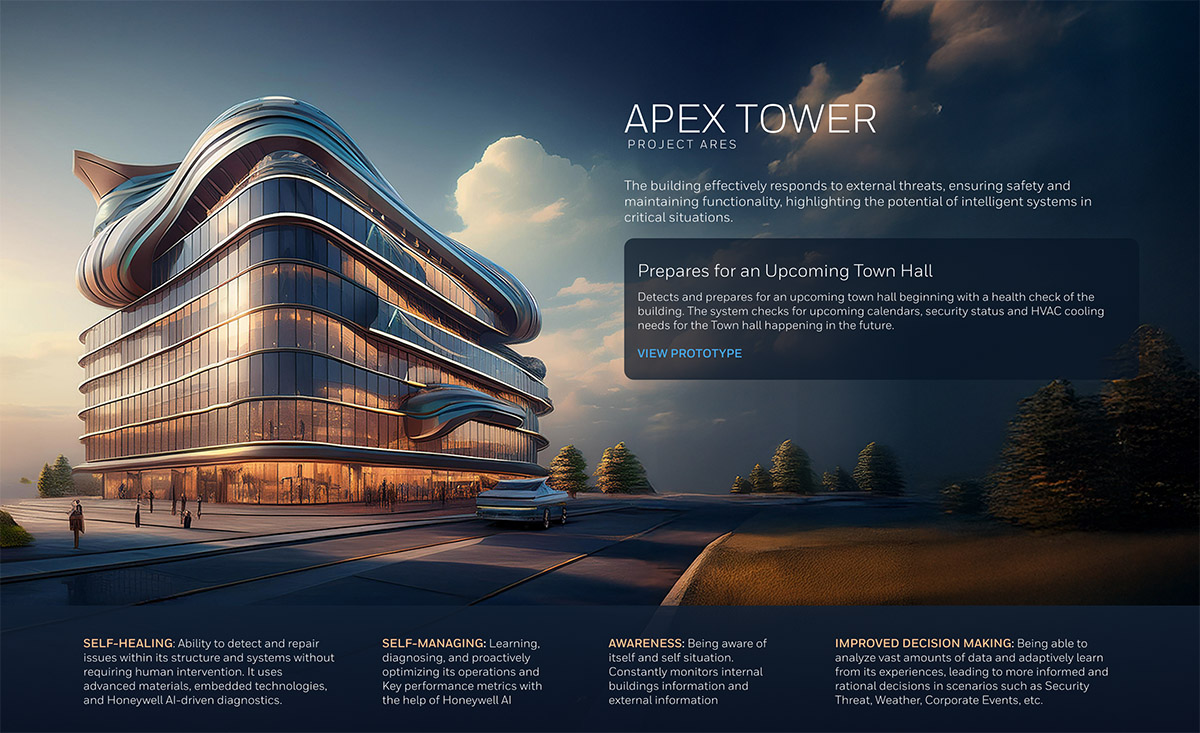
The building self-assesses ahead of an event — calendars, security, cooling needs.
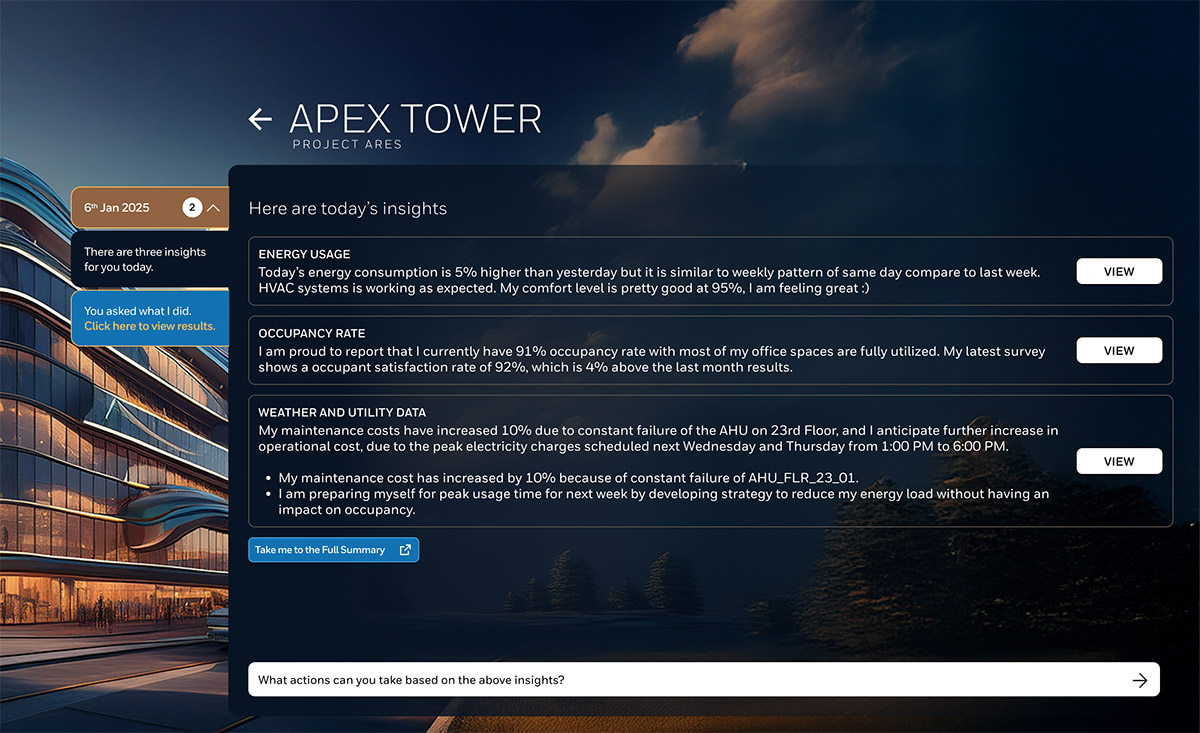
Anomalies surface before they become emergencies, routed to who can act.
Safety and regulatory tracking handled with minimal manual effort.
Built in two weeks as a vision piece, the Sentient Building reframed the team's default question — from "how fast can we respond when something breaks?" to "what should the building have already handled before anyone noticed?" It gave the predictive, self-healing direction a concrete shape stakeholders could react to, argue with, and build toward — the point of a vision artifact is to make the future arguable, and this one did.
The building notices its own faults, decides which it can fix, and surfaces the rest to the right person — before anyone else sees them.